From feelings
SEL Foundation
K–2
Social-emotional stories grounded in classroom reality — emotions, self-regulation, peer skills, and safe behavior.
210+ resources
Explore SEL FoundationLearning System
It's a skill waiting to be taught.
Built on the CASEL Framework and delivered through Rex & Dino stories — SEL for K–2, thinking skills, and a flagship AI cognition series for Grades 3–6.
Brand progression
From feelings
K–2
Social-emotional stories grounded in classroom reality — emotions, self-regulation, peer skills, and safe behavior.
210+ resources
Explore SEL FoundationTo thinking
K–2
Cognitive fables that bridge SEL and judgment — gather clues, slow down, listen to more than one side, see the whole picture.
12+ resources
Explore Thinking SkillsTo the future
3–6 · Flagship · Season 1 live
Rex & Dino's Big AI Ideas — flagship R&D series on how AI learns, why it fails, and why human judgment still matters.
7+ resources
Explore AI CognitionSEL Foundation stories map to all five U.S. SEL core competencies — then drill down by classroom domain.
CASEL · The professional standard for SEL in U.S. schools
SELKID is built around the five core competencies defined by the Collaborative for Academic, Social, and Emotional Learning (CASEL) — then translated into kid-sized stories for real K–2 classrooms.
Learn about CASEL ↗Each resource targets an evidence-based competency — self-awareness, self-management, social awareness, relationship skills, or responsible decision-making.
We break competencies into scenarios, triggers, emotions, and teachable skills — the moments teachers actually see on the carpet, in line, or at recess.
Rex & Dino social stories give children a narrative mirror, discussion prompts, and practice — Story → Discussion → Activity → Reflection.
The abilities to understand one's own emotions, thoughts, and values and how they influence behavior across contexts.
In K–2: Naming feelings, noticing body signals, recognizing strengths and limits
SELKID approach: Stories help children pause and identify what is happening inside before they act — the Feeling Thermometer, calm-down cues, and "name it to tame it" moments.
The abilities to manage one's emotions, thoughts, and behaviors effectively in different situations and to achieve goals.
In K–2: Impulse control, waiting, transitions, calming strategies, task persistence
SELKID approach: Our largest story lane — waiting tokens, raise-hand routines, safe hands, and finish-what-you-start scripts for independent work.
The abilities to understand the perspectives of and empathize with others, including those from diverse backgrounds and cultures.
In K–2: Personal space, reading others' feelings, inclusion, fairness
SELKID approach: Stories place Rex in group situations where he must notice how his body and words land on classmates — space bubbles, listening faces, and left-out moments.
The abilities to establish and maintain healthy and supportive relationships and to navigate settings with diverse individuals and groups.
In K–2: Cooperation, turn-taking, apologies, repair after conflict, communication
SELKID approach: Friendship repair stories, fair-turn games, and apologize-and-fix scripts — because peer relationships are where SEL is tested every day.
The abilities to make caring and constructive choices about personal behavior and social interactions across situations.
In K–2: Choices and consequences, flexible thinking, trying again after mistakes
SELKID approach: When plans change or mistakes happen, stories model a next-step choice — flexible thinking, problem-solving, and our Thinking Skills bridge into judgment.
SEL methodology
Once you know the CASEL lane, SELKID's matrix helps you find the exact story — by scenario, trigger, emotion, and skill.
What we believe
For every child, emotional struggle isn't a mistake — it's a skill waiting to be taught.
Scenario × Trigger × Emotion × Skill
SELKID starts from a simple belief: big feelings aren't bad behavior; they're skills still learning to grow. From there we use the CASEL Framework — the professional standard for SEL in U.S. schools — and map each competency into classroom scenarios, triggers, emotions, and teachable skills. That is how 200+ stories form one queryable system.
Every SELKID story maps to one or more CASEL core competencies — the same framework used by schools and districts across the United States.
Where does this happen?
What sets the moment off?
What does the child feel?
What habit are we building?
Each story is cross-tagged; browse the full CASEL framework or filter below.
Query the full SEL catalog Try: Blurting at carpet Thinking Skills catalog
Delivery model
Every SELKID resource follows the same classroom rhythm teachers can use immediately.
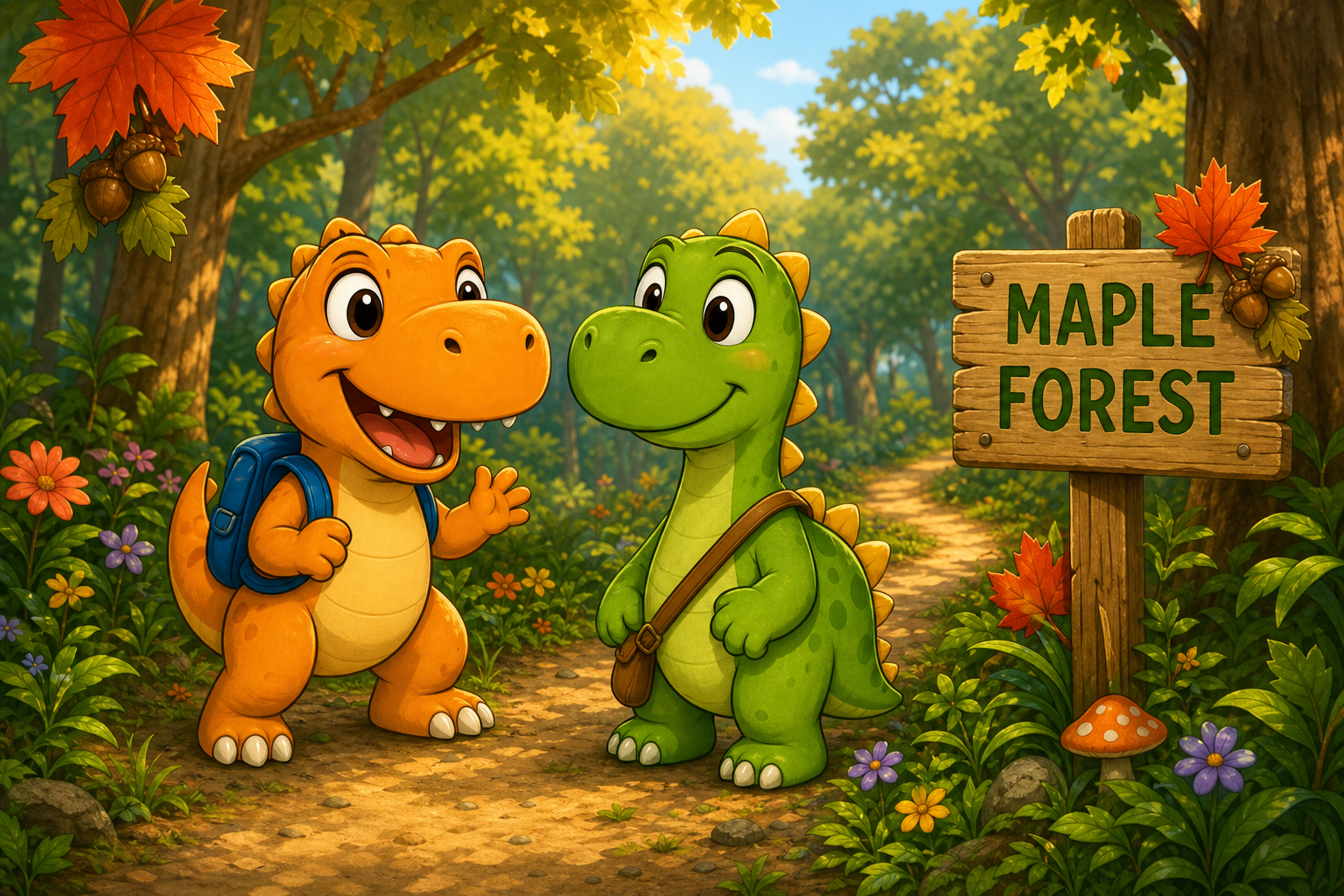
Comic or read-aloud introduces the skill through Rex & Dino in Maple Forest.
Guiding questions help children name the problem in their own words.
Printable practice turns the idea into something students can try.
Exit prompts connect the story to classroom and home life.
Emotional struggle isn't a mistake.
It's a skill waiting to be taught.
Every child is doing their best with the skills they have so far. When feelings run big in the classroom, the answer isn't shame — it's a story, a name for the feeling, and a habit to practice. That is what SELKID builds, one read-aloud at a time.
FAQ
Clear answers for educators, parents, and search tools exploring SELKID.
SELKID is a story-based learning brand for K–6 classrooms. It publishes CASEL-aligned social-emotional learning (SEL) read-alouds, Rex & Dino thinking skills stories, and a flagship AI cognition comic series — all built around characters in Maple Forest.
SELKID is designed for elementary teachers, school counselors, homeschool parents, and caregivers who want no-prep read-aloud resources that turn big feelings and big ideas into kid-sized stories children can discuss and practice.
SEL stories and thinking skills resources target K–2. The Rex & Dino AI Cognition series (Big AI Ideas) is built for Grades 3–6. Many educators use SELKID across K–6 depending on classroom need.
SELKID offers 228+ classroom resources on Teachers Pay Teachers, including 210+ SEL stories, 12 thinking skills read-alouds, and 6 AI cognition units in Season 1 of Rex & Dino's Big AI Ideas.
Yes. SELKID's SEL stories are organized around the five CASEL competencies — self-awareness, self-management, social awareness, relationship skills, and responsible decision-making — and mapped to classroom scenarios, triggers, emotions, and skills.
Every SELKID resource follows the same classroom rhythm: Story → Discussion → Activity → Reflection. Teachers open a read-aloud, discuss the moment with students, practice a short activity, and close with reflection.
Educators can get Unit 1: Training Data free — the complete 16-panel Rex & Dino comic plus partial lesson guides from the AI Cognition series. Sign up at selkid.com/free-resources.
Rex and Dino are SELKID's main characters in Maple Forest. Rex represents a child's first reaction; Dino brings humor and reframing. Together they carry SEL foundations into thinking habits and AI literacy stories.
Big AI Ideas is SELKID's comic-first AI cognition series for Grades 3–6. Season 1 covers six units — Training Data, Data Quality, AI Bias, Hallucination, Model Collapse, and Human Judgment — teaching how AI learns, fails, and still needs people.
Classroom resources are sold on the SELKID Teachers Pay Teachers store at teacherspayteachers.com/store/selkid. Young-reader chapter books are also published on Amazon under author Emily Willow at story.selkid.com.
For educators
Join the SELKID list for the free Unit 1: Training Data sample — full 16-panel comic plus partial lesson guides.
No spam. Unsubscribe anytime.